
Start with the word "SPINE" and change one letter at a time to turn it into "SHAPE". Each new word must be valid and you can’t use the same word twice.
About Word Ladder
Welcome to the deceptively challenging world of word ladders. Although they seem simple, word ladders challenge you, forcing you to use logic and strategy, working far more of your brain than you might expect. The rules are simple, but the solutions can be anything but.
How to play a word ladder
Like many of the best puzzles, the rules are simple and easy to pick up.
- You are given a starting word, for example COLD, and a target word, such as WARM.
- Changing one letter at a time, you have to transform the starting word into the target word in exactly the number of steps allowed.
- You can only change letters, you cannot add or remove letters, and each new word must be a valid English word.
Using our example, in four steps, you could go:
One of the challenges is that there are often multiple ways to complete a puzzle. You might also go:
The best way to learn, though, is to solve a few yourself. Why not try some puzzles on this site, or read on to find out more about word puzzles, why they are so popular, and the benefits you can get from spending just a few minutes pondering which letters you can change?
The history of word ladders
The invention of word ladders is credited to Lewis Carroll — best known for writing Alice's Adventures in Wonderland and Through the Looking Glass. Carroll invented the game for friends in 1877, writing about it in his diary a few months later.
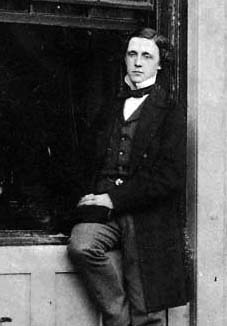
Calling his game 'Doublets', he originally envisaged it as a two-player game, with partners taking it in turns to move the word closer to the target word.
From that small start, with just a few friends playing, the popularity of word ladders soon grew. Within a couple of years, Carroll was contributing the puzzles to Vanity Fair. Starting in March 1879, they became a regular feature in the magazine, and the puzzle soon established itself.
The puzzles have been called different names over the years. Carroll's original name, Doublets, is rarely used, but other names, like word links or word chains, have become more popular. However, they are most commonly known by the name 'word ladders', mainly because they are usually presented in a vertical grid that resembles a ladder.
Variants
Extra letters
Most word ladders use four-letter words. However, some puzzles use five-letter words. There are some who feel that this provides more of a challenge, but others suggest that the more limited options make longer words easier. Indeed, word ladders with six letters or more are rare because of the limited solutions they offer.
Related words
Lewis Carroll's original problems used start and end words that have a connection. The earliest he is known to have created was an opposite: HEAD → TAIL. But other puzzles may be synonyms, like GOOD → FINE, or just words that have a relationship, like BALL → KICK.
Clue word ladders
Some word ladders provide clues. This means that multiple solutions are not possible, but instead that each step must meet the rules of word ladders and match the clue.
Fun facts and benefits
The shortest and longest word ladders
The shortest word ladders are already solved. These single-step word ladders only need a single letter change, like CAT → MAT. However, deliberately long word ladders, using obscure words with limited options, can stretch some four-letter ladders to over 100 steps.
Being ALOOF gets you nowhere
Mathematician Donald Knuth analysed five-letter word ladders with common words. He discovered 671 words, including ALOOF, that could not be changed. He named the whole group 'aloof words' because they stayed away from all the others.
Word ladders help build your vocabulary
Playing word ladders might help you expand your vocabulary. Even short words can carry rich meaning, and experimenting with them can strengthen your command of language.
Word ladders can help improve your language
Whether you are a native English speaker or learning it, word ladders can help. Speaking the words in the ladder, while noting the letter changes, is a good way to learn phonics and distinguish similar sounding words.
Improve mental agility
- Strategic thinking.
- Working memory.
- Cognitive benefits from combining visual, sound, and meaning cues.
Above all, they are fun!
Word ladders are simple to understand, challenging enough to be rewarding, and provide a satisfying brain workout.
Try one todaySee for yourself how much fun climbing those ladders can be.